Bachelor's thesis
Scene depth estimation using RGB-D cameras and monocular depth estimation models.
Will be listed here once published.
Abstract
Depth perception is a fundamental requirement for safe and effective interaction with the environment in fields such as robotics and autonomous driving. Existing approaches to depth acquisition—such as LiDAR, stereo vision, RGB-D sensors, and monocular depth estimation—offer complementary advantages but are invariably affected by measurement uncertainty. This work addresses the problem of estimating and refining both depth and its associated uncertainty by combining the outputs of an RGB-D sensor with a monocular depth estimation model. We propose modeling uncertainty as a per-pixel Gaussian distribution, enabling the fusion of multiple depth sources through probabilistic multiplication. To achieve this, we develop a machine learning model capable of predicting uncertainty maps from paired RGB images and depth estimates, capturing both aleatoric and systematic sources of error. Experiments are conducted using the HyperSim synthetic dataset, ensuring access to ground-truth depth for supervised training. The proposed method produces refined depth maps with lower uncertainty, offering a more reliable scene representation. Potential applications include robotics, autonomous navigation, and other domains requiring robust depth perception.
Results
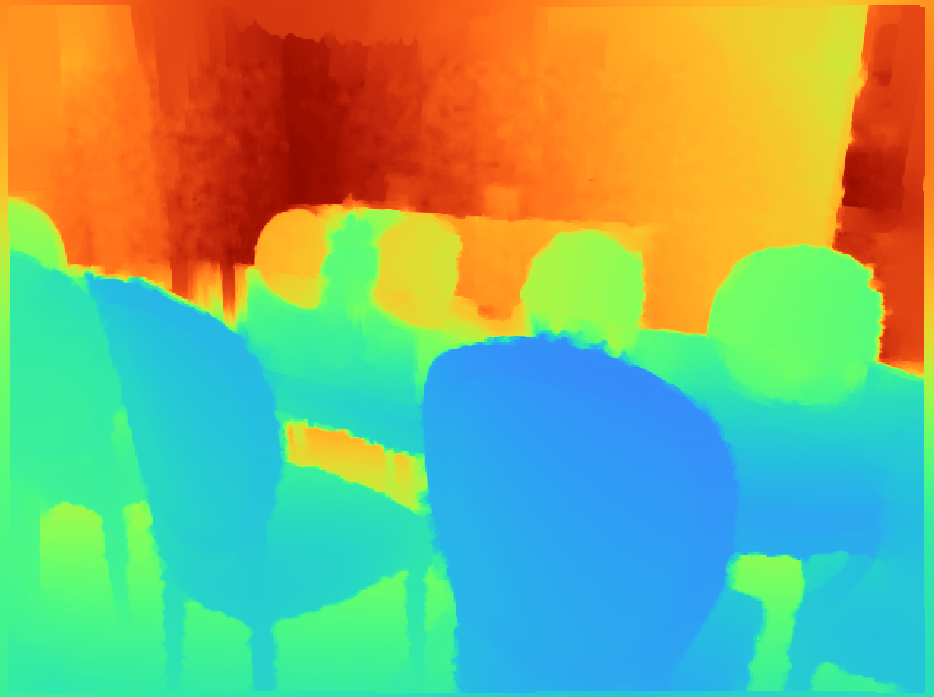
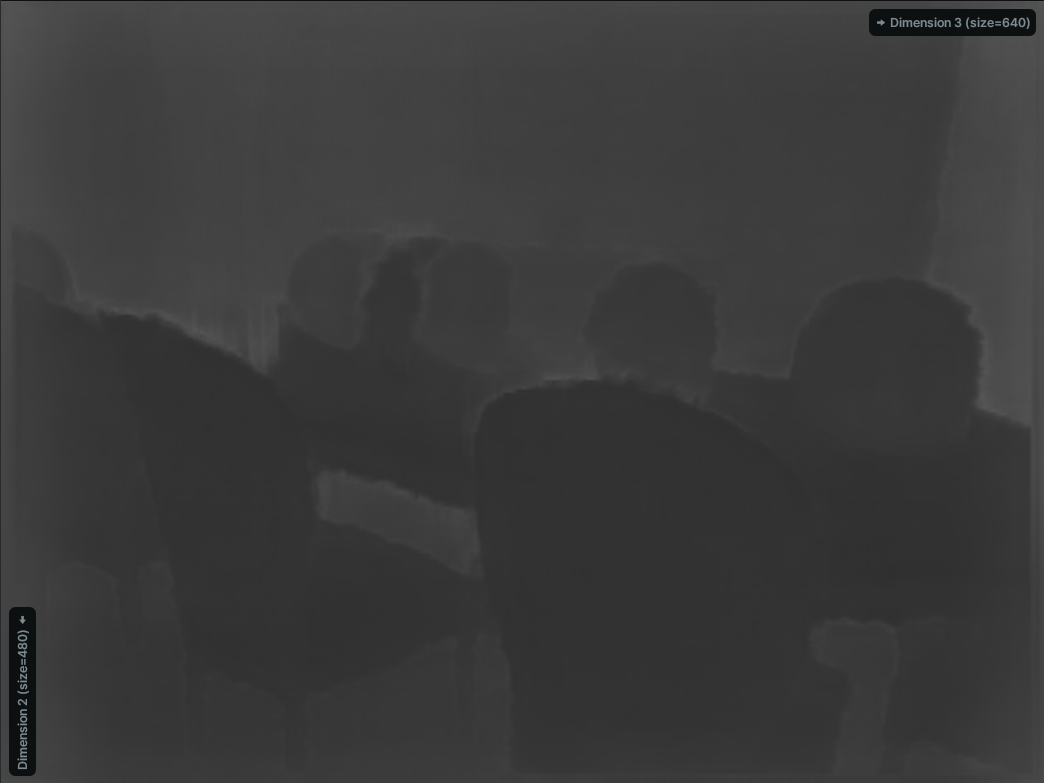
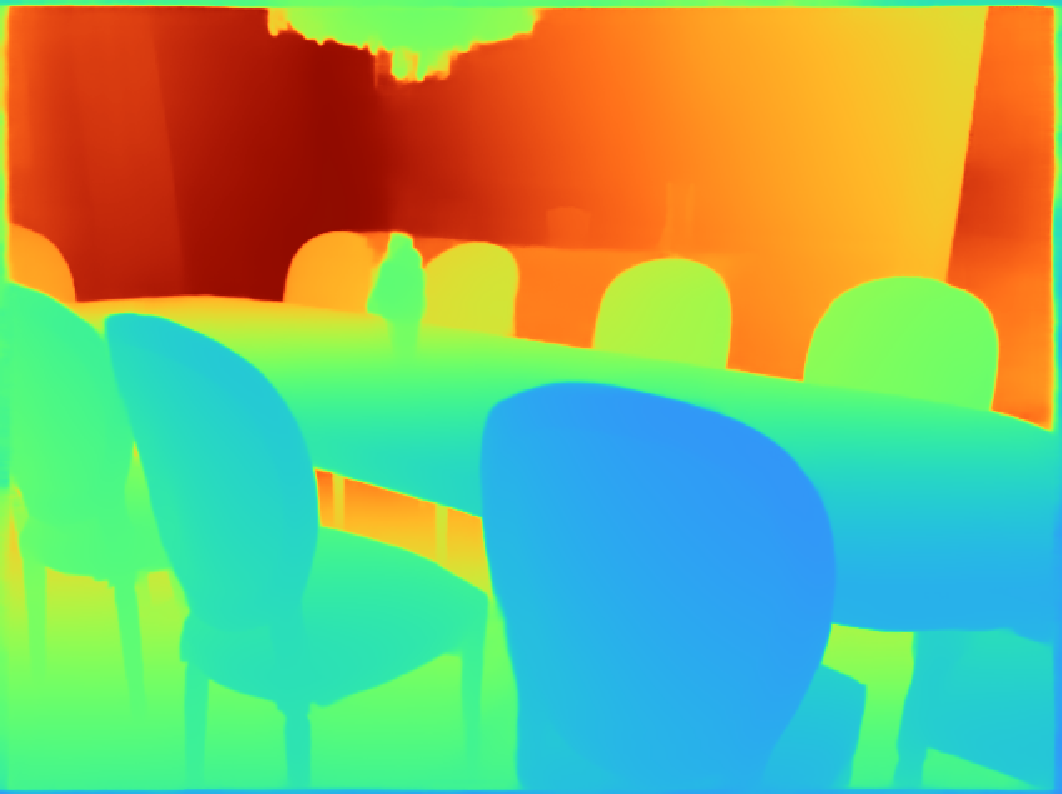
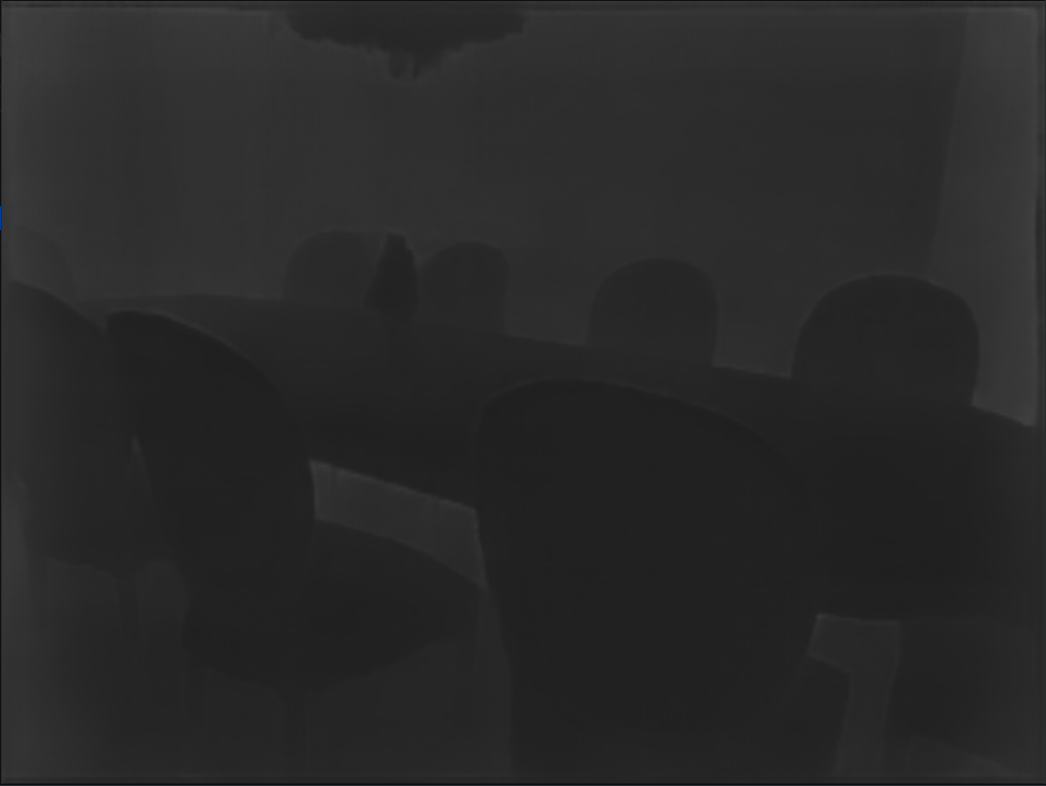
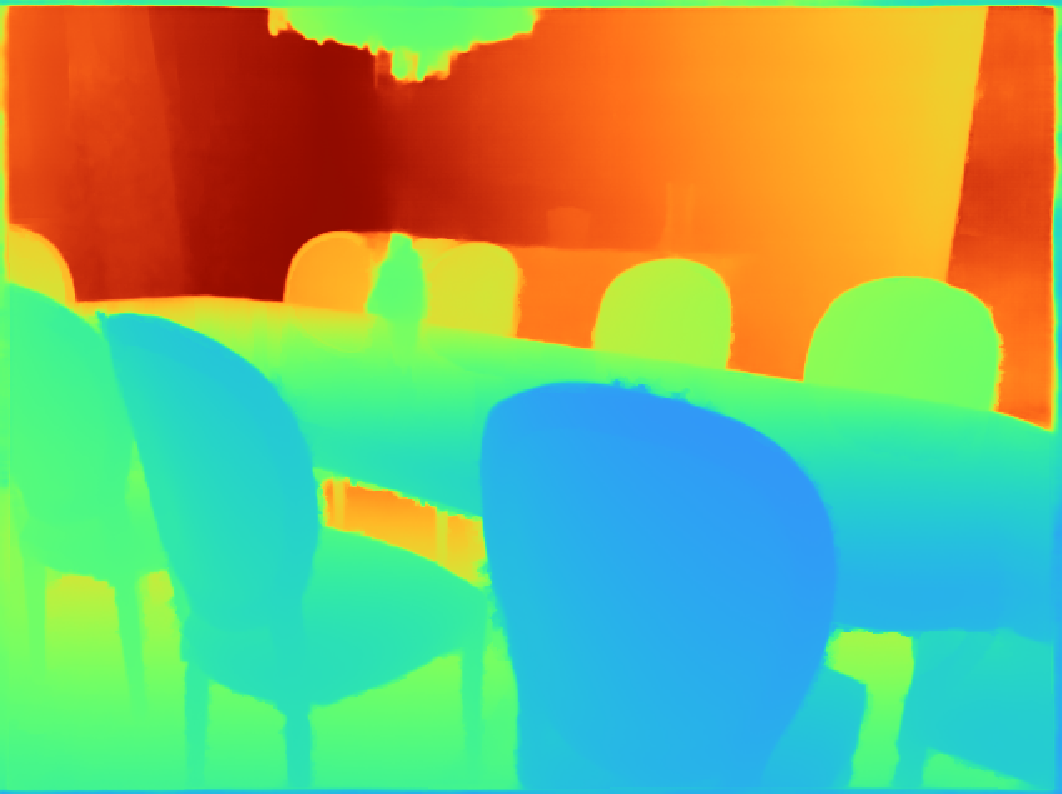
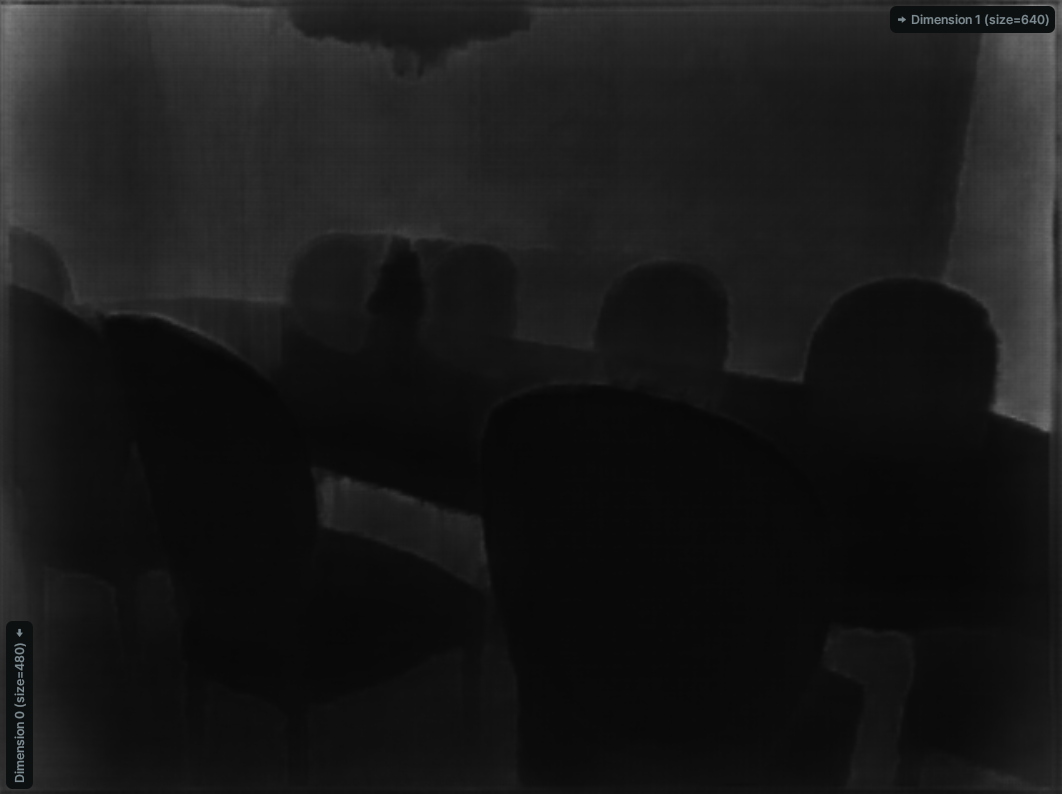
From top to bottom:
- Original, captured by the RGB-D camera
- Depth estimated by depth-pro
- Refined depth and variance maps using the proposed method
| Depth | Estimated variance |
|---|---|
 |
 |
 |
 |
 |
 |